Welcome all, new and recurrent people, to this sharing of invitations, projects, and collaborations in aims of a transdisciplinary approach to research, to experiencing life, and in the spirit of upholding our responsibility to awe and the practice of our poietic forces.
This past month has been full of enriching and diverse encounters. From the return of Italy’s extravaganza, eerie whispers and blindfold touch with SistersHope to multidisciplinary seminars between Art & Science in Copenhagen as captured above during my performance hosted at CApE.
Through diverse forums on solidarity and conferences on diversity within research, it keeps reverberating:
How can we become more aware of the way we frame our questions?
The frames we choose, the relevancies we assume, the angles we privilege?
How can we not use the master’s tools to compete within the same house and rather dismantle it through collective imagination?
Out of these shared affections and considerations comes an awaited collaboration:
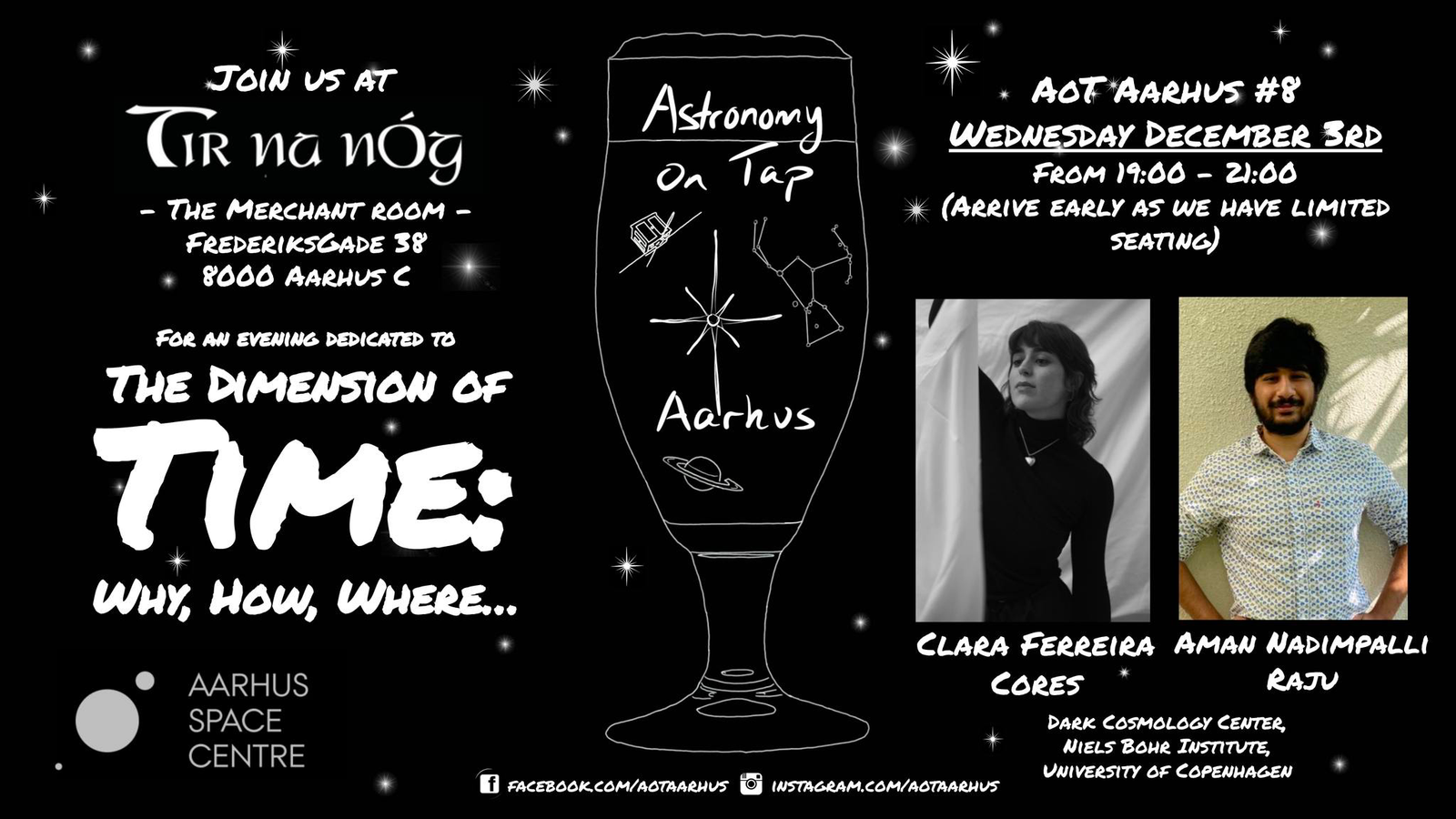
Join us in exploring the Dimension of Time at Astronomy on Tap in Aarhus!
Next Wednesday evening, a playful collective exploration bridging scientific and performance practices will be unfolding, in collaboration with musician Rune Fog-Nielsen.
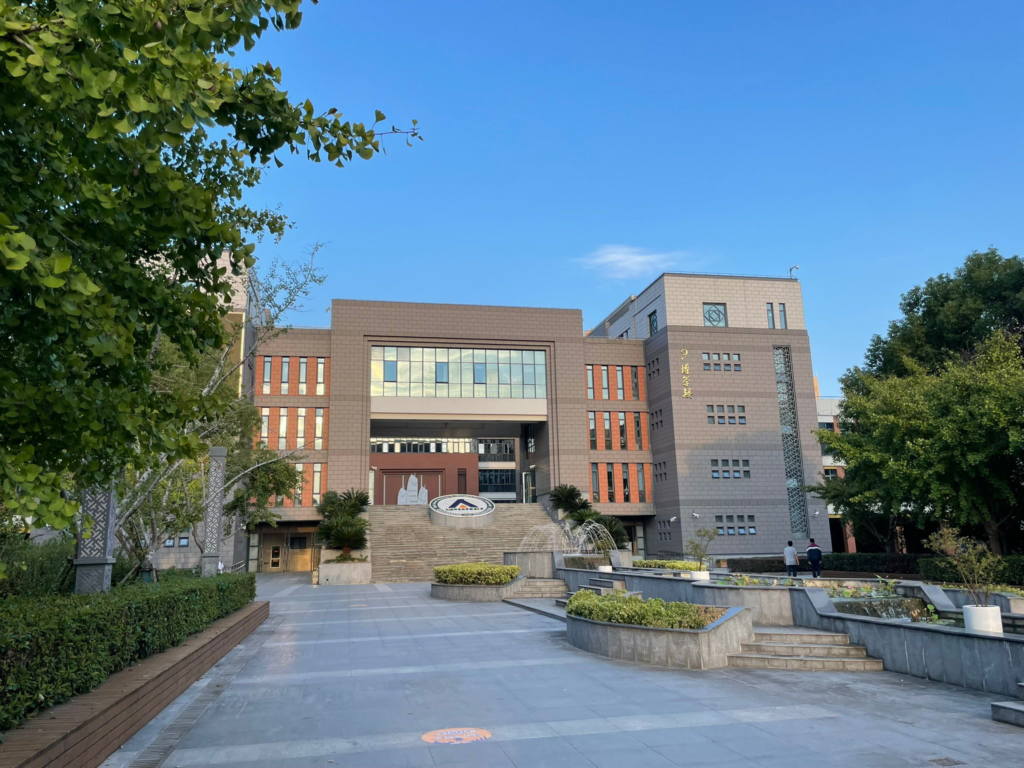
And as we complete our final month orbiting the Sun in 2025, another exciting collaboration is beginning to coalesce on a distant shore: Shanghai.
We will be working with the High School attached to Shanghai Normal University, one of the first experimental and model senior high schools, honored as both an “Art Specialty School of Shanghai” and an “Advanced Collective in School Art Education.”
At the heart of their original campus lies the beloved botanical garden “润园,” a sanctuary that has long nurtured philosophical curiosity. There is also an observatory, allegedly the first in a mainland Chinese high school.
Between sky-gazing and soil-tending, the oxidizing of our carbon at each breath and the ripples of primordial black-hole mergers, I will be sharing this transdisciplinary approach through rigor and performance — detailed questioning and movement sharing — in aims of joining in flux with the students; in pursuit of educations that are alive.
In our hope for joyful, caring futures, we hold a responsibility to awe: to share with those who feel life coursing through them, and to remain curious about it. All under the title of Time as a relational force, one that seeks to transcend the silos separating arts, sciences, and philosophy.
If you’ve made it all the way here, thank you sincerely for your attention, and as per tradition in these newsletters, here are a couple of offerings for your delight:
Eloquent words from philosopher and martial artist Alessandra Chiricosta, on strength and the art of combative forces, on acutely re-phrasing questions within our society, within our divides and the blazing to embody:
las artes de combate también te enseñan esto, a simular, a no hacer entender, a confundir;
eso es un arte profundo.
Las amazonas cortan en diagonal el campo de batalla […] realizan algo tan inesperado que nadie entiende qué están haciendo ni de qué lado están.
— Contra el mito de la fuerza viril
the martial arts also teach you this, to feign, to make things unclear, to bewilder;
that is a profound art.
The Amazons cut diagonally across the battlefield […] they do something so unexpected that no one understands what they are doing or which side they’re on.
— Against the Myth of Virile Strength
And a tune to keep working on finding hope even as darkness embraces us in this part of the hemisphere, I leave you in the more than capable hands and silky voice of Shirley Horn:
May we remember how kindness kindles life. Of the effort, of the challenge, of the joy to remain alive and blossom; blossom and shed and bleed and kick and scream.
And may we disrupt the narratives which cannot be accepted if life is to be kindled.
Other initiatives where you can find me : https://yonderartscience.com | https://nbi.ku.dk/english/research/astrophysics/dark/ | Forening Oasis [website in the making]
Performance is a world-generation practice that allows for the interplay of our perceptions and relations. In my artistic practice, performance becomes a research on how we inhabit and co-create meaning. Embodiment becomes another channel of inquiry. In this search for knowledge—this need for portals of wonder through which shared imaginaries can be recombined—embodiment offers generative ground. Performance opens temporary co-habitations that unsettle habitual perceptions. In the images above, from a performance at the Stork Fountain in Copenhagen, passersby became collaborators in transforming the site; the landscape shifted, and with it our relations to it. Such moments invite the “otherwise”, imagination, play, and experimentation with the realities we think we inhabit.
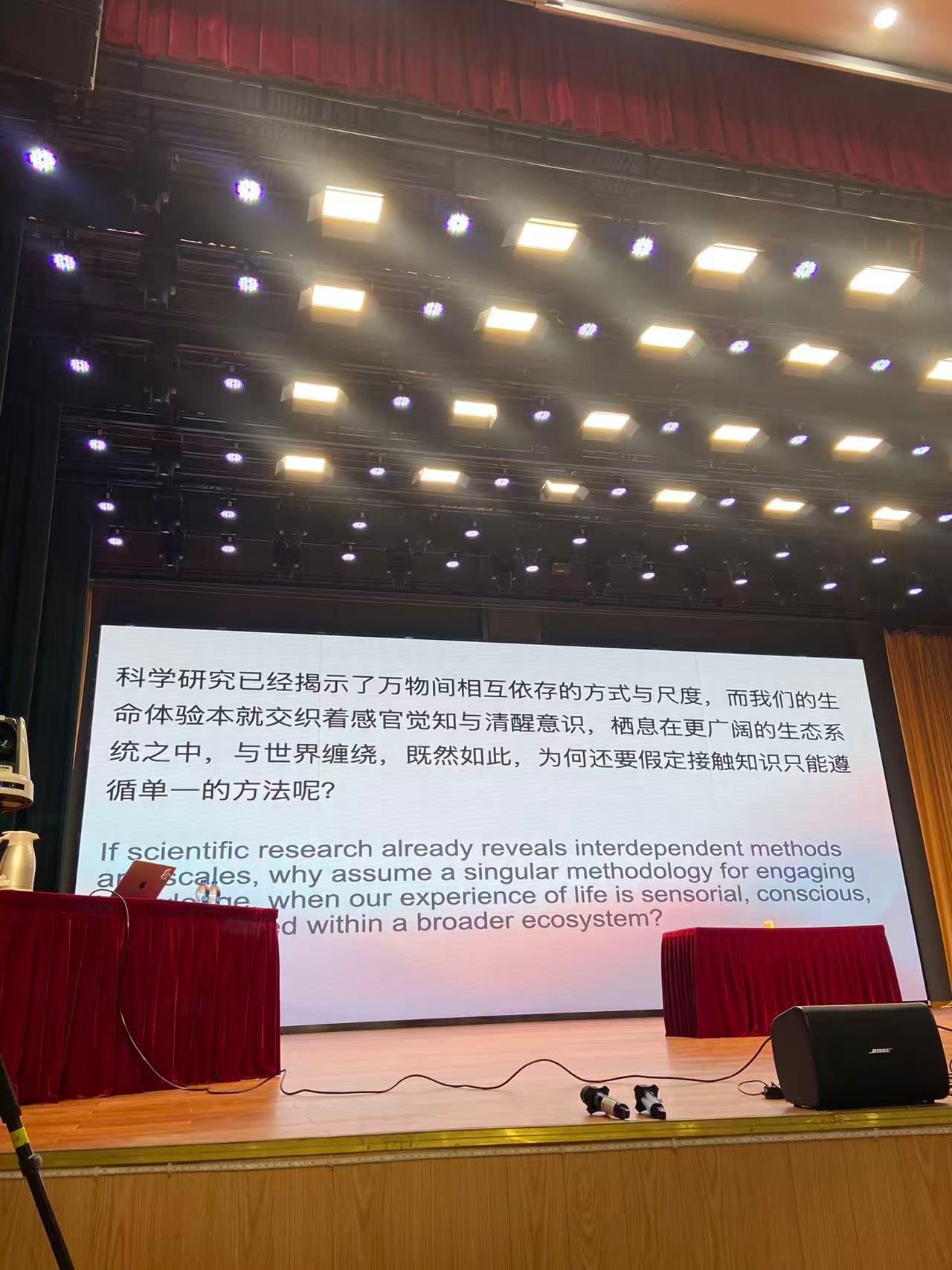
Pluriversality expands and confronts the way we listen. It is a decolonial approach to epistemology and ontology that challenges the idea of a single world, a single method, a single way of knowing. Instead, it insists on the power of diversity and on confronting how our institutions determine what counts as knowledge.
Heisenberg reminds us that “what we observe is not nature itself, but nature exposed to our method of questioning.” If this is the case, then part of the work is the courage and tenderness required to examine those methods, especially when they reveal what is uncomfortable, strange, or historically discriminatory.
Pluriversal approaches draw on global epistemologies and practices that hold time, temporalities, memory, and futures differently — not with the aim of replacing one worldview with another, but in shared affection distanced from dualities. These include performative, poetic, ritualistic, and community-rooted forms of knowledge as in Gloria Anzaldúa’s imaginative bodily flights; revitalizations of archives; and reflections on erasure and nonlinear temporalities, like Olufemi’s experiments for the otherwise. Thinkers like Rasheedah Phillips and Audre Lorde remind us that knowledge is shaped through cultural experience and embodied feeling, while Haraway’s situated knowledges emphasize partiality, relation, and accountability. Together, they reject objectivity as detachment and frame understanding as a transformative and political act.
The study of entropy and the so-called arrow of time begins by revisiting the foundations of thermodynamics and statistical mechanics, and how these frameworks define the properties and evolution of physical systems. This research examines entropy through these theoretical frameworks while questioning the assumptions embedded in the approximations that underlie them.
Our current scientific understanding of time largely relies on reductionist, metric frameworks rooted in classical thermodynamics and Newtonian physics. However, examples across different scales—from nanoscale molecular dynamics to self-gravitating systems—challenge many of the commonly used methods. This project therefore revisits statistical mechanics in regimes involving small particle numbers and long-range gravitational interactions, investigating how equilibrium and temporal directionality emerge—or fail to emerge—in self-organizing systems. By attending to the subtleties within these regimes, concepts often treated as stable begin to shift, revealing the limits of our standard approximations.
More broadly, this work explores how the arrow of time may depend not only on physical processes but also on scale and observation. It raises the possibility that the temporal asymmetry we experience is shaped in part by memory and perception, while the quantum nature of physical systems allows for fluctuations that may include local or temporary reversals. Whether such fluctuations occur but remain inaccessible to human perception is an open question motivating this investigation.
